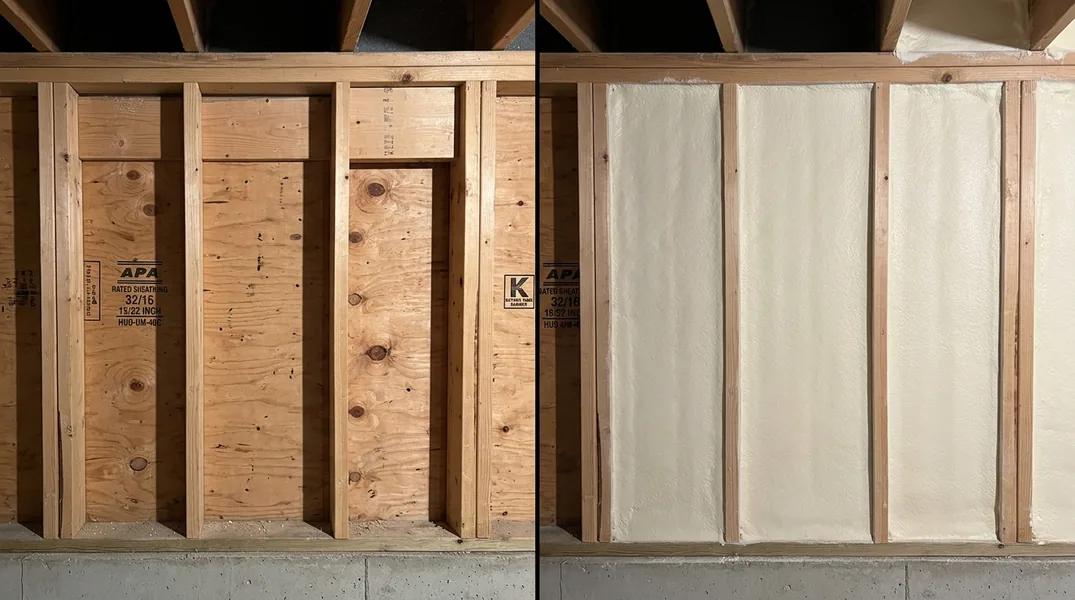
Understanding Spray Foam Insulation Types
When homeowners in Rochester begin researching attic insulation solutions, they quickly encounter two main categories: open cell and closed cell spray foam. Both are effective at sealing air leaks and reducing energy loss, but they work differently and offer distinct advantages depending on your home's specific needs. Understanding these differences is the first step toward making an informed decision about which type of Attic Spray Foam Insulation will best serve your property.
The fundamental difference between these two types lies in their cellular structure. Open cell foam has cells that are not completely enclosed, allowing air and moisture to pass through the material. Closed cell foam, by contrast, has tightly sealed cells that create a dense barrier resistant to air and moisture penetration. This structural difference affects everything from R-value performance to cost, making it essential for homeowners to understand how each type functions in a residential attic environment.
What Is Open Cell Spray Foam Insulation?
Open Cell Spray Foam Insulation is a lighter, more flexible material that expands significantly after application. Because the cells remain open, this foam allows water vapor to pass through it, which means it functions as an air barrier but permits the attic to breathe. This characteristic makes open cell foam particularly valuable in climates where moisture management is important. The material typically achieves an R-value of approximately 3.5 to 3.6 per inch, which is respectable but lower than its closed cell counterpart.
One of the primary advantages of open cell foam is its cost effectiveness. For homeowners in Rochester working within a tighter budget, open cell foam offers a more affordable entry point into spray foam insulation. Additionally, because it expands more than closed cell foam, it can fill irregular spaces and cavities more easily, making it excellent for attics with complex framing or existing obstructions. The material is also easier to cut and trim after installation, and it provides good sound dampening properties, which can be a nice secondary benefit for homeowners seeking quieter indoor environments.
Exploring Closed Cell Spray Foam Insulation Benefits
Closed Cell Spray Foam Insulation is denser and more rigid than open cell foam, creating a superior air and moisture barrier. With an R-value of 6 to 7 per inch, closed cell foam provides nearly double the insulating power of open cell foam in the same thickness. This superior performance means you need less material to achieve the same thermal resistance, which can actually offset its higher initial cost in certain applications. For homeowners seeking maximum energy efficiency and long-term performance, closed cell foam represents a premium choice.
The structural integrity of closed cell foam makes it particularly valuable for sealed attic insulation applications. Because it does not allow moisture to pass through, it creates a true vapor barrier, which is especially important in attics where condensation might otherwise accumulate. The material's rigidity also means it can provide some structural support to roof assemblies, and it resists water absorption, making it ideal for attics that might experience occasional moisture intrusion. Many homeowners choose closed cell foam specifically for its durability and the peace of mind that comes with a truly sealed attic insulation system.
Climate Considerations for Rochester Homes
Rochester's climate presents specific challenges for attic insulation. The region experiences cold winters with significant snowfall and relatively humid summers, creating conditions where both air sealing and moisture management matter. The winter cold demands high R-value insulation to prevent heat loss, while the humidity levels mean that moisture control becomes increasingly important for long-term attic health and preventing mold growth or wood rot.
For many Rochester homeowners, closed cell foam addresses both concerns effectively. Its high R-value provides excellent winter protection, and its vapor barrier properties prevent moisture from accumulating in the attic space during humid months. However, open cell foam can also work well in Rochester homes, particularly when combined with proper attic ventilation strategies. The key is understanding your home's specific conditions, roof design, and ventilation setup. A professional assessment from Rochester Spray Foam Insulation can help determine which approach aligns best with your home's architecture and local climate patterns.
Attic Spray Foam Insulation Cost in Rochester: What to Budget
Cost is understandably a major factor in any insulation decision. Open cell spray foam typically ranges from 50 to 70 cents per board foot, making it the more economical choice upfront. Closed cell foam generally costs between 1.00 and 1.50 dollars per board foot, reflecting its superior performance and durability. However, these figures represent only material costs, and the actual investment in your project depends on the size of your attic, the desired R-value, and local labor rates. For a complete understanding of pricing specific to your home, contacting Rochester Spray Foam Insulation for a free estimate is the best approach.
When evaluating cost, consider the long-term return on investment. Closed cell foam's superior R-value means you might achieve your target insulation performance with less material, and its durability means you won't need replacement or additional work for many decades. Many homeowners find that the energy savings from closed cell foam justify the higher initial expense, particularly in Rochester where heating costs during winter months can be substantial. Additionally, improved attic insulation often qualifies for energy efficiency tax credits or rebates, which can offset some of the upfront cost. Be sure to ask about any available incentives when you request your estimate.
Sealed Attic Insulation and the Unvented Attic Approach
Modern attic insulation strategy increasingly favors the concept of a sealed attic or unvented attic, where the attic space itself becomes part of the home's conditioned envelope rather than an unconditioned buffer zone. Unvented attic spray foam applications are central to this approach, as they create a continuous air and thermal barrier that prevents conditioned air from escaping into the attic. This strategy can improve energy efficiency, reduce HVAC strain, and protect the attic space from outdoor temperature extremes.
Closed cell foam is the preferred material for sealed attic insulation because its vapor barrier properties prevent moisture problems in a sealed environment. When spray foam is applied directly to the underside of the roof deck, it creates an unvented attic that stays warm in winter and cool in summer, improving overall home comfort. Open cell foam can also be used in sealed attics, but it requires additional vapor barriers or careful design considerations to prevent moisture accumulation. If you're interested in transforming your attic into a conditioned, sealed space, Rochester Spray Foam Insulation can evaluate your home's suitability and recommend the best approach. Call (507) 577-5314 to discuss your attic's potential.
Making Your Decision: Which Foam Is Right for You?
Choosing between open cell and closed cell spray foam ultimately depends on your priorities, budget, and home's specific conditions. If cost is your primary concern and your attic has adequate ventilation potential, open cell foam offers good value and solid performance. If you want maximum energy efficiency, superior moisture protection, and a sealed attic system, closed cell foam is the better investment despite its higher upfront cost. Many homeowners also benefit from a hybrid approach, using closed cell foam in critical areas like the roof deck and open cell foam in other sections to balance performance and cost.
The best way to determine the ideal solution for your Rochester home is to consult with experienced professionals who understand local climate conditions and building practices. Rochester Spray Foam Insulation has extensive experience installing both types of spray foam in attics throughout the region. Our team can evaluate your attic's current condition, assess your energy goals, and recommend the most cost-effective solution tailored to your home. Contact us today at (507) 577-5314 or visit our website to schedule your free estimate and take the first step toward a more comfortable, energy-efficient home.
Looking for a professional spray foam insulation contractor in Rochester? Rochester Spray Foam Insulation responds fast for all your spray foam insulation needs.
Get a Free Quote