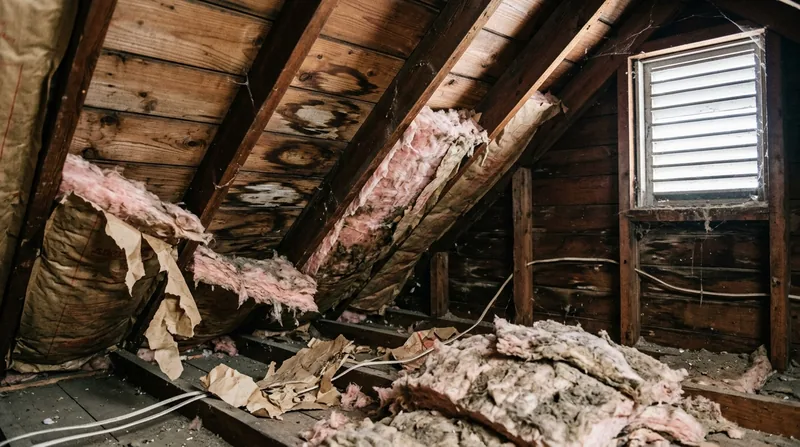




Old insulation in Rochester attics tells a story. Fiberglass that was installed in 1985 has settled, gotten wet from ice dam leaks, or been contaminated by rodent droppings. Cellulose blown into rim joists during a 2005 retrofit has absorbed moisture from winter condensation and summer humidity swings that define IECC climate zone 6A. Before we spray new insulation removal and air sealing into your attic or crawl space, that failed material has to come out cleanly and safely. Rochester Spray Foam Insulation removes old insulation so the substrate is dry, the air bypasses are visible, and new spray foam has a foundation that will last. We've been doing this work since 2014 across Rochester, Byron, Stewartville, Kasson, and the surrounding towns of Olmsted, Mower, Fillmore, Winona, Wabasha and Goodhue counties.
Why Insulation Removal Matters in Rochester's Older Homes and Attics
Rochester's housing stock is a mix of downtown brick and wood-frame homes built before 1920, mid-century ranches and split-levels scattered across the city, and newer subdivisions pushing toward Byron and Pine Island. Nearly every one of those homes sits over a full basement, which means the rim joist at the top of the foundation wall is a constant thermal and moisture trouble spot. In the attic, the problem is ice damming. Heat escapes past unsealed bypasses and penetrations, melts snow on the roof deck, and water backs up under the shingles. When you cut into that attic to remove the old insulation, you often find water stains, mold growth on the sheathing, and insulation that has lost all R-value because it absorbed moisture.
- We remove all old fiberglass batts, blown-in cellulose, or failed spray foam so the attic deck is bare and any damage is visible before we specify new work.
- We vacuum and bag all debris so dust and settled particles do not contaminate the new spray foam application or your home during cure.
- We inspect rim joists, band joists, and joist bays for moisture, rot, or previous water intrusion that must be addressed before foam goes down.
- We identify air bypasses around ductwork, electrical chases, and plumbing penetrations so they can be sealed as part of the new insulation system.
Removal done right is the foundation of a spray foam insulation job that performs and lasts. Without it, new foam sits on a damp, contaminated surface and fails early.
Key info: Rochester's ice dam problem is driven by the stack effect pulling warm air upward through attic bypasses and uninsulated rim joists. Old insulation removal is the first step to stopping that heat loss. The Minnesota Building Code and Rochester's local amendments govern attic ventilation, ignition barriers, and thermal barriers; we help you understand what applies at your address and refer permitting questions to the Rochester Building Department.
For more detail on what happens after removal, see our page on attic spray foam insulation in Rochester.
How We Remove Old Insulation and Prepare Your Attic for Spray Foam
Insulation removal is a methodical process. We set up containment, remove the old material in stages, inspect the substrate, and leave you with a clean, dry deck ready for new foam. The timeline depends on the attic size, the type and depth of old insulation, and whether we find water damage or mold that needs attention before we proceed. A typical Rochester attic over a 1,500 sq ft ranch takes one to two days for removal alone.
- We set up negative air pressure and mechanical ventilation to contain dust and odor during removal.
- We remove all old insulation layer by layer, bag it, and haul it away for disposal or recycling.
- We vacuum the attic deck and rim joists to remove settled dust, rodent droppings, and debris.
- We inspect the roof deck, joist bays, and band joists for moisture, rot, previous water stains, and air bypasses.
- We document the condition with notes and photos so the spray foam crew knows exactly what they are working with.
- We give you a written summary of what we found and what needs to happen next before new insulation goes in.
Once removal is done and the substrate is dry, we move to the air sealing and spray foam application phase.
Local example: A 1960s split-level in Stewartville with 6 inches of settled cellulose in the attic and water stains along the north edge of the roof deck. We removed the cellulose, found the sheathing wet and stained, and paused the job. The homeowner had a roofer fix the leak and the sheathing dried out, and then we returned to spray 2 inches of closed-cell foam and seal all the rim joist penetrations. That job took four visits over three weeks, but the attic is now tight and far less prone to ice dams.
Insulation Removal Methods and Equipment
| Approach | Description | Best for |
|---|---|---|
| Fiberglass batt removal | Hand removal of batts from joist bays, bagging and hauling, followed by vacuum and wipe-down of surfaces. | Attics with 4 to 6 inches of batts, typical of 1970s to 1990s ranch homes in Rochester and Byron. |
| Blown-in cellulose removal | Vacuum extraction using commercial-grade equipment, containment to prevent dust spread, and disposal of collected material. | Attics filled with 8 to 12 inches of cellulose, common in retrofit jobs from 2000 to 2015 in Kasson, Stewartville and surrounding towns. |
| Failed spray foam removal | Mechanical extraction of deteriorated or improperly installed foam, substrate inspection and repair, preparation for new foam application. | Attics where previous open-cell foam has absorbed moisture or closed-cell foam was applied over damp substrate and is delaminating. |
| Rim joist and crawl space clearing | Removal of old batts or spray foam from band joist cavities and crawl space rim areas, inspection for moisture and pest damage. | Basements and crawl spaces in older Rochester homes where fiberglass or cellulose has settled or absorbed ground moisture. |
Each method is chosen based on what is already in place, the condition of the substrate, and what new insulation system will follow. We always inspect before we estimate.
Insulation Removal Cost in Rochester: What to Expect
The cost of insulation removal in Rochester depends on the attic size, the type and depth of old insulation, accessibility, and whether the substrate is dry or requires remediation before new foam can go in. A straightforward removal of settled fiberglass from a 1,500 sq ft attic typically starts at $950 and moves upward with complexity. Cellulose removal costs more because it requires vacuum equipment and containment. Removal of failed spray foam or material contaminated by water or rodent activity adds time and disposal fees.
The biggest cost drivers are attic size (measured in square footage of ceiling area), the depth of old insulation (6 inches of fiberglass is faster than 12 inches of cellulose), and substrate condition. If we find water damage, mold growth, or structural rot, we stop and document the issue so you can decide whether to remediate before we proceed with new insulation. We never spray over a wet or contaminated deck.
Getting two or three estimates is smart. A written estimate should list the square footage of attic or crawl space, the type of material being removed, the disposal method, and what happens if we find damage. Vague estimates with no breakdown are a red flag. Visit our pricing page for a detailed breakdown of removal costs and what moves the price up or down.
Travel is included in Rochester and surrounding service areas. We respond to estimate requests within 24 hours at (507) 577-5314.
Insulation Removal Near Me: What Rochester Homeowners Should Know When Hiring a Contractor
Choosing the right contractor for insulation removal is as important as the removal itself. A bad removal job leaves dust in your walls, contaminates the new insulation, and creates odor and health concerns during and after the spray foam cure. The contractor you hire should be fully insured, should provide a written estimate with a scope of work and a clear timeline, should answer your questions about permits and code compliance, and should be reachable by phone when you have a question.
- Verify that the contractor carries comprehensive general liability and workers compensation insurance; ask for a certificate of insurance before work begins.
- Get written estimates from at least two contractors that describe the attic size, type of material, depth, disposal method, and timeline in plain language.
- Ask whether the contractor will inspect the substrate and document any water damage, mold, or structural issues before the removal starts.
- Confirm that the contractor understands local permitting and code requirements for your address; the Rochester Building Department can tell you what applies to your home.
- Check references from recent jobs in Rochester, Byron, or Stewartville; a reputable contractor will have three to five homeowners willing to talk about their experience.
- Ask about the contractor's experience with the type of old insulation in your attic; removal of cellulose is different from removal of batts or failed foam.
If you are ready to get started, contact us for a free estimate. We will inspect your attic, explain what we find, and walk you through the next steps with no pressure to book.
Insulation Removal in Rochester: Pricing Guide
| Service | Price | Details |
|---|---|---|
| Attic insulation removal, fiberglass batts | Starting at $950 | Typical 1,500 sq ft attic with 4 to 6 inches of settled batts, removal, bagging, and vacuum cleanup included |
| Attic insulation removal, blown-in cellulose | Starting at $1,200 | Vacuum extraction equipment required; 8 to 12 inches of cellulose in 1,500 sq ft attic, containment and disposal included |
| Failed spray foam or contaminated insulation removal | Starting at $1,400 | Mechanical extraction, substrate inspection for moisture and mold, additional disposal fees for hazardous or wet material |
| Rim joist and crawl space removal | Starting at $650 | Band joist cavities and perimeter areas, smaller scope but same attention to moisture inspection and substrate prep |
| Travel and estimate | Included / Free | No mileage fees in Rochester and surrounding service areas; free written estimate within 24 hours of request |
Indicative pricing, the exact cost depends on square footage, finish, and site access. Free personalized estimate within 24h at (507) 577-5314.


