Why Rochester Homes Need Year-Round Insulation Solutions
Living in Rochester means experiencing some of the most demanding seasonal weather in the upper Midwest. Winter temperatures plunge well below freezing, while summer humidity can make attics feel like saunas. Between these extremes, your home's insulation system must work overtime to maintain comfort and protect your property from damage.
Many homeowners don't realize that inadequate insulation creates a cascade of problems throughout the year. In winter, heat escapes through poorly insulated attics, creating warm spots on the roof that melt snow and ice. This meltwater refreezes at the eaves, forming ice dams that back up under shingles and leak into walls and ceilings. Come summer, that same attic becomes a heat trap, driving up cooling costs and creating moisture problems that lead to mold and wood rot. Attic Spray Foam Insulation addresses both extremes by creating an air-tight, thermally efficient barrier that works for your home every single day of the year.
Winter Warriors: How Spray Foam Stops Ice Dams Before They Start
Ice dams are one of the most destructive and costly problems Rochester homeowners face each winter. They form when warm air from your living space leaks into the attic, warming the roof deck and melting snow. The water runs down to the cold eaves, where it refreezes into a dam that traps more meltwater behind it. Within hours, that water can seep through your roof and damage insulation, drywall, electrical systems, and even the structural framing of your home.
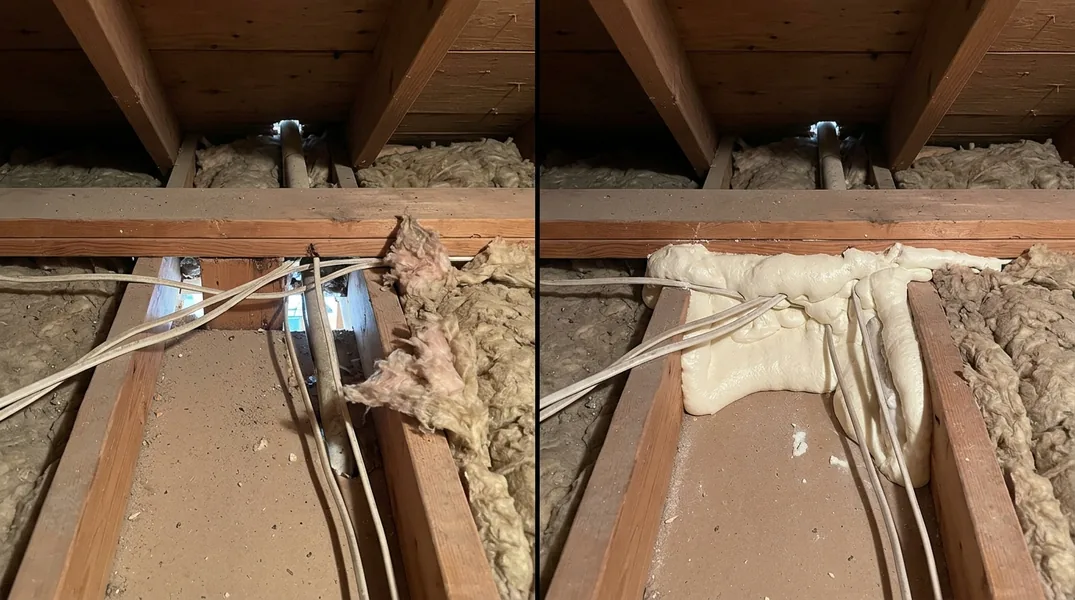
Traditional fiberglass batts and blown-in cellulose insulation are porous materials that allow air to pass through them. This means heat from your home continues to escape into the attic no matter how thick the layer is. Closed Cell Spray Foam Insulation works differently. When applied to your attic floor and rim joists, it creates a continuous air seal that prevents warm air from entering the attic in the first place. The roof deck stays cold, snow melts evenly (or not at all), and ice dams simply don't form. Beyond preventing ice dams, this air sealing also reduces your heating costs by 15 to 20 percent, since less conditioned air escapes to the outdoors.
Summer Challenges: Managing Heat and Humidity in Rochester Attics
When summer arrives in Byron and surrounding areas, attic temperatures can exceed 140 degrees Fahrenheit on sunny days. This intense heat radiates down through ceilings into your living spaces, forcing air conditioning systems to run constantly. At the same time, humidity levels spike, especially during the wet season. Moisture trapped in a poorly insulated attic creates ideal conditions for mold growth, wood decay, and insect infestations.
Spray foam insulation handles both challenges simultaneously. Open Cell Spray Foam Insulation is slightly more breathable than closed cell, making it an excellent choice for attics where some moisture management is important. However, closed cell spray foam's superior R-value and moisture resistance make it the preferred choice for most Rochester attics. By reducing the temperature differential between inside and outside, spray foam keeps your attic cooler and drier, protecting your roof structure and reducing the load on your cooling system. The result is lower energy bills and a healthier home environment from June through September.
Metal Building Insulation and Specialty Applications
Rochester's agricultural heritage means many homeowners own pole barns, agricultural buildings, or have converted metal structures into living spaces. These buildings present unique insulation challenges that standard residential insulation cannot address. Metal building insulation requires materials that can handle the thermal bridging effect of steel or aluminum framing, prevent condensation on interior surfaces, and maintain performance in unheated or semi-heated spaces.
Spray foam is the gold standard for these applications. Pole barn insulation using closed cell foam creates a vapor barrier on the interior surface of metal walls and roof panels, preventing condensation that would otherwise drip onto equipment, hay, or livestock. For homeowners with a barndominium insulation project, spray foam offers superior performance compared to traditional fiberglass in metal-framed buildings. The best insulation for metal building applications combines air sealing, moisture control, and high R-value per inch. Steel building insulation using spray foam eliminates the need for separate vapor barriers and provides consistent thermal performance across the entire structure, including at rim joists, roof peaks, and wall-to-foundation transitions where metal buildings are most vulnerable to heat loss and condensation.
Attic Spray Foam Insulation Cost in Rochester: What to Budget
Homeowners often hesitate to invest in spray foam insulation because they assume it costs significantly more than fiberglass or blown-in cellulose. While spray foam does have a higher upfront cost per square foot, the total cost of ownership is substantially lower when you factor in energy savings, durability, and avoided repair costs from ice dams and moisture damage. A typical pricing estimate for attic spray foam depends on the square footage of your attic, the depth of insulation required to meet your R-value goals, and whether you need closed cell or open cell foam.
Rochester homeowners who invest in spray foam typically recover their costs within 5 to 7 years through reduced heating and cooling expenses. After that payback period, the energy savings continue for the life of your home. Unlike fiberglass batts that settle over time and lose effectiveness, spray foam maintains its R-value for decades. When you add in the prevention of ice dam damage (which can cost $10,000 to $25,000 to repair), the financial case for spray foam becomes even stronger. To understand your specific situation and get an accurate free estimate, contact Rochester Spray Foam Insulation at (507) 577-5314 for a professional assessment of your home.
Wall and Injection Foam Insulation Near Me: When Professional Installation Matters
While attic insulation is the most common application, many Rochester homeowners benefit from insulating exterior walls, rim joists, and crawl spaces. Wall & Injection Foam Insulation is particularly valuable in older homes where original insulation has settled or deteriorated. Rather than removing siding and re-insulating from scratch, injection foam can be applied through small holes drilled into the wall cavity, filling gaps and air spaces without major renovation.
This approach is cost-effective, minimally invasive, and delivers immediate energy improvements. Rim joists (the band of wood that sits on top of your foundation) are notorious energy thieves in older homes. Sealing and insulating rim joists with spray foam can reduce basement heat loss by 20 percent or more. If you're considering any of these applications for your Kasson or Stewartville home, professional installation is essential. Improper application can trap moisture, create air pockets, or fail to seal critical areas. Rochester Spray Foam Insulation has the expertise and equipment to evaluate your specific needs and execute the job correctly the first time.
Looking for a professional spray foam insulation contractor in Rochester? Rochester Spray Foam Insulation responds fast for all your spray foam insulation needs.
Get a Free Quote